
Unlock Massive Traffic Gains: Why Refreshing Your Old Content Is Your Secret SEO Weapon
Estimated reading time: 9 minutes
Key Takeaways
- Refreshing old content can boost your organic traffic by 200-500% — a powerful SEO growth hack.
- Old blog posts have authority, backlinks, and loyal readers — treating them as digital assets can yield massive SEO gains.
- Google prioritizes fresh, comprehensive answers, so updating your content keeps you competitive in rankings.
- Leading brands like Stridewise and EarthKind saw traffic increases of 268% and 1,075% by optimizing existing content.
- A smart content refresh saves time, costs less, and scales more easily than creating new blog posts from scratch.
Table of contents
- Introduction
- Why Your Old Blog Posts Are SEO Gold Mines (You’re Sitting Right on Top)
- Proof It Works: Real Results, Not Just Wishful Thinking
- Your No-Nonsense Guide to Crushing Content Refreshing
- Bonus Hacks Because You Deserve Them
- Final Thought: Stop Chasing, Start Cultivating
- Want to Get Even Smarter? (Not THAT kind of deeper…)
- Frequently Asked Questions

Ever feel like you’re stuck on a nonstop content treadmill?
Chasing the latest trends, churning out new blog posts, and hoping this one is the jackpot winner?
Here’s a game-changing secret: sometimes the biggest SEO wins aren’t about creating brand-new content. The real magic happens when you dust off and refresh what you already have.
Welcome to the power of content refreshing — not just a tactic but a serious growth hack that can boost your organic traffic by 200-500%.
Sounds wild? Let’s break it down.
Instead of starting from zero, you take your existing, maybe a bit forgotten, underperforming posts and turn them into SEO superstars.
Companies like Stridewise saw their traffic jump by 268%, while EarthKind skyrocketed by a staggering 1,075% — all by smartly optimizing what they’d already published.
No endless content grind. No crazy budgets. Just pure, scalable growth.
Ready to uncover your hidden SEO gold mines? Let’s dive in.
Why Your Old Blog Posts Are SEO Gold Mines (You’re Sitting Right on Top)
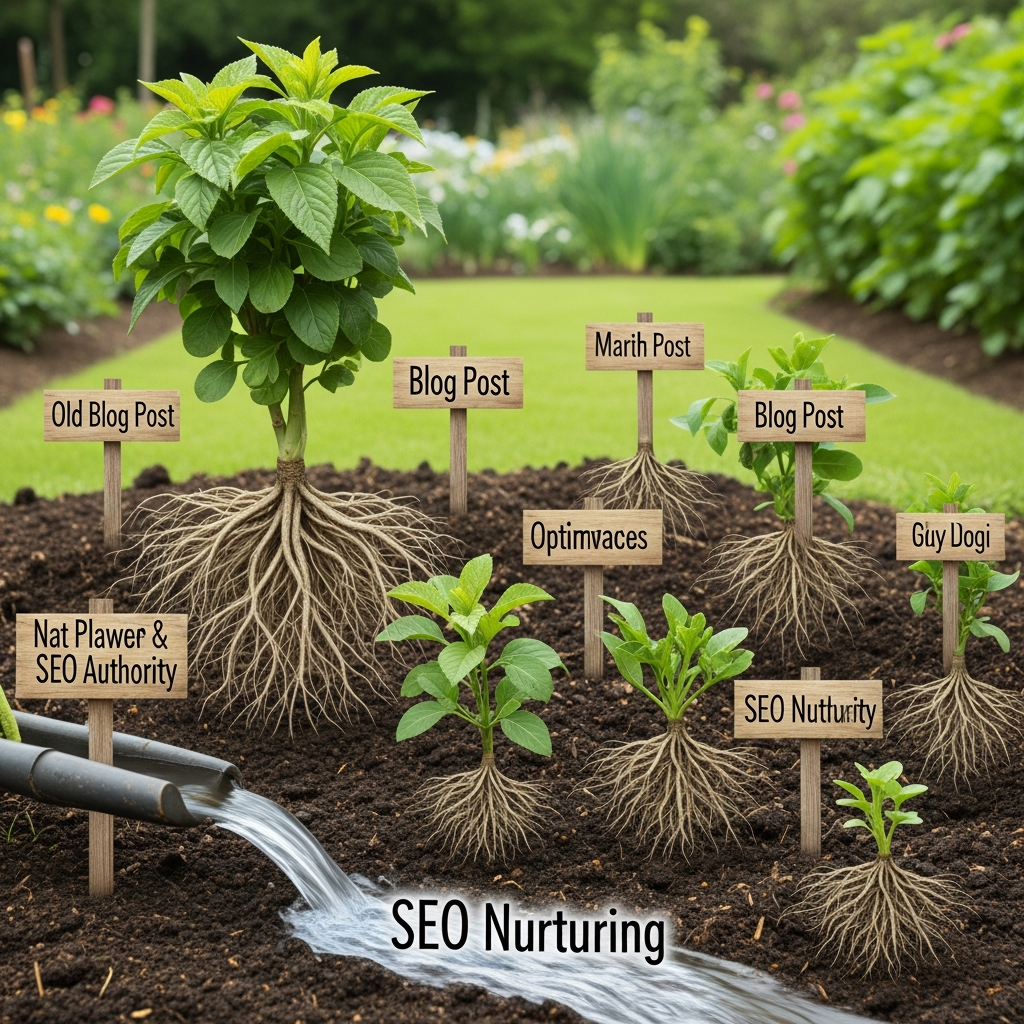
Think about your website as a garden. You plant seeds (new content), some bloom beautifully, but others get a little neglected or stop thriving.
Most people either ignore those tired posts or delete them in favor of new seeds.
Big mistake.
You’ve already nurtured those roots. Your old content comes with authority, backlinks, social shares, and maybe even loyal readers.
The Power of Existing Content Assets
Every piece of content on your site isn’t just words—it’s a digital asset packed with potential.
Over time, it gains authority. But things change: search intent shifts, info grows stale, making your content look like a relic from the Stone Age.
Instead of throwing it away, give it a glow-up. This isn’t duplication of effort; it’s supercharging what’s already working.
Why Google Craves Fresh, Comprehensive Answers
Google’s mission? Deliver the best possible answer every single time.
If your content feels outdated or dull compared to competitors, bam, you lose rankings.
Refreshing your content helps you:
- Swap out dusty stats for shiny new data.
- Layer in the latest trends and insights for relevancy.
- Make content easier and more enjoyable to read—no one wants a giant wall of text.
- Add engaging visuals like images, videos, or infographics.
- Target new, juicy keywords popping up in your niche.
Suddenly, your old post becomes a mic drop moment for searchers.
The Ultimate ROI: Save Time, Money, and Sanity
Creating content from scratch? It’s a marathon: research, writing, designing, promoting—it drags on.
Refreshing content? More like a power sprint.
You build on an existing foundation, which means less work, faster turnaround, and a budget that smiles back at you.
For many businesses, it’s not just cost-effective; it’s the key to scalable success.

Proof It Works: Real Results, Not Just Wishful Thinking
Don’t just take my word for it. Here are genuine case studies:
Stridewise: 268% Traffic Explosion
Stridewise, a savvy financial services brand, had plenty of posts that barely made a ripple.
They updated figures, clarified explanations, and strengthened calls to action.
The result? A jaw-dropping 268% increase in traffic.
Imagine tripling your visitors without crafting a single new blog post. Not too shabby!
EarthKind: A Mind-Blowing 1,075% Surge
EarthKind, an eco-friendly consumer brand, had solid content parked in stasis.
They refreshed regularly, aligned with seasonal trends, expanded topics, and answered more questions.
Traffic? Skyrocketed by 1,075% — more than ten times their original numbers!
Both played it smart, not hard, proving this strategy’s power.

Your No-Nonsense Guide to Crushing Content Refreshing
Convince you yet? Good. Here’s how to start:
1. Hunt Down Your Hidden Gems (Underperforming Content)
Time to channel your inner SEO detective with tools like Google Search Console, Ahrefs, or SEMrush.
Look for:
- High impressions, low clicks: People see it but don’t click. Why?
- Content stuck on pages 2 or 3: Just needing a little lift to hit page 1.
- Outdated posts: Broken links, old info, or just plain dusty.
- Traffic flatlines: Pages that once thrived but now limp.
Pro tip: Start where there’s already some authority — easier to boost than rebuild.
2. Conduct a Content Audit & Spy on Competitors
Analyze your list under a microscope:
- Are stats up to date?
- Missing key points compared to the top-ranking pages?
- Has search intent shifted?
- How’s user engagement—high bounce or low time on page?
Peep what your competitors do well and ask how you can do it better.
3. Give Your Content a Serious Glow-Up
Roll up your sleeves:
- Update data, examples, and trends.
- Dive deeper into related questions.
- Boost readability with short sentences, bullet points, and clear headings.
- Add visuals: photos, videos, infographics.
- Optimize for fresh keywords, including semantic variations.
Consider adding a “New for [Year]” section or a FAQ to punch up value.
4. Polish the Little Details (They Add Up)
- Craft compelling meta titles and descriptions—they’re your traffic magnets.
- Use descriptive image alt text.
- Link internally to fresh and related content.
- Change URLs only if necessary—don’t forget to redirect.
5. Shout It From the Digital Rooftops!
- Share on social media.
- Blast it in your email newsletter.
- Reach out for backlinks if it’s truly stellar.
Hit publish, then give it a good pull!
6. Monitor, Adjust, Repeat
- Track rankings, traffic, and engagement.
- Identify what’s working and what’s not.
- Tweak based on data.
- Repeat on your next batch of posts.
This cycle turns your site into an unstoppable growth machine.
Bonus Hacks Because You Deserve Them
- Schedule it: Don’t wait for decay. Audit content quarterly or biannually.
- Prioritize heavy hitters: Focus on cornerstone content and heavily trafficked pages first.
- Cull wisely: Not all content is worth saving—merge or delete weak posts.
- A/B test like a pro: Experiment with headlines, CTAs, and layouts for better CTR.
- Speed thrills: Ensure fast load times and mobile-friendly design. Google—and users—demand it.
Final Thought: Stop Chasing, Start Cultivating
The proof is in the pudding: Stridewise. EarthKind. Their results are undeniable.
Refreshing your content is more than a strategy; it’s an SEO superpower.
It lets you maximize what you have, improve relevance, and climb search rankings without reinventing the wheel every time.
It’s not lazy; it’s smart.
So ditch that overwhelmed feeling.
Start auditing, refreshing, and watch your organic traffic soar.
Want to Get Even Smarter? (Not THAT kind of deeper…)
- Google Search Console: Your best buddy to spot underperforming pages.
- Ahrefs Content Audit Guide: A deep dive from SEO pros.
- Moz: How to Refresh Content for SEO: Expert insights to level up.
- SurferSEO: Top tool for spotting gaps and optimizing content.
Frequently Asked Questions
Q: How often should I refresh my old content?
It’s best to audit and refresh key content quarterly or at least biannually. Regular updates keep your rankings strong and ensure relevance in changing markets.
Q: What’s the difference between refreshing content and creating new content?
Refreshing leverages existing content’s authority and improves it with updated info, better SEO, and enhanced user experience. Creating new content starts from scratch and typically requires more time and resources.
Q: Can refreshing content negatively impact SEO?
If done incorrectly—like removing valuable info, changing URLs without redirects, or adding low-quality content—it can hurt rankings. But a well-planned refresh typically boosts SEO performance.
Q: How do I identify which posts to refresh first?
Focus on posts with high impressions but low clicks, those stuck beyond page 1, or outdated content that once performed well. Using analytics tools can help pinpoint these).