
How David Ogilvy’s Rolls-Royce Ad Teaches Us to Market with Laser Focus Today
Estimated reading time: 8 minutes
Key Takeaways
- David Ogilvy’s Rolls-Royce ad used one oddly specific detail to create trust and grab attention.
- Specific, believable claims cut through the advertising noise better than vague marketing.
- Authenticity and proof-backed benefits are the new currency in marketing influence.
- Today’s successful brands like Apple, Patagonia, and Tesla use specificity and data-driven proof consistently.
- Marketers should ditch buzzwords, use emotional storytelling, and back claims with real evidence to win.
Table of contents
- Introduction
- Why Ogilvy’s Tiny Clock Detail Supercharged Rolls-Royce Sales
- Old School Wisdom, New School Marketing Wins: Why Ogilvy’s Approach Still Rocks
- Want to Borrow Ogilvy’s Magic? Here’s Your Cheat Sheet
- Not Just History: Today’s Brands Killing It With Specificity
- The Final Word: Be a Rolls-Royce, Not a Lemon
- Frequently Asked Questions

Let’s be honest. In a jungle of “revolutionary breakthroughs” and “industry-leading solutions,” most marketing just feels… meh.
But then there’s David Ogilvy. The legend who, decades ago, dropped a Rolls-Royce ad with a headline so oddly specific and strangely captivating, it still gives me goosebumps today:
“At 60 miles an hour the loudest noise comes from the electric clock.”
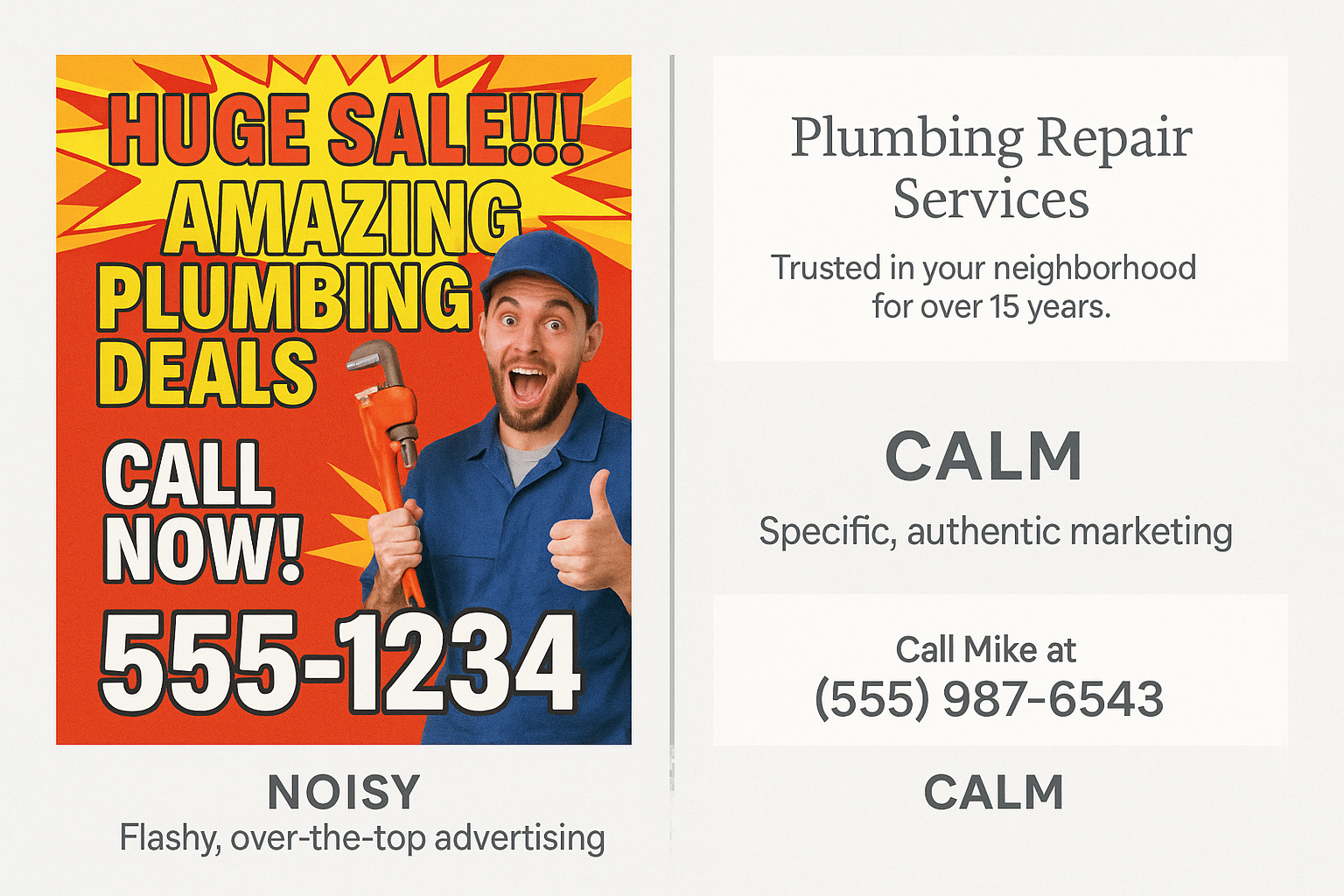
No flashy boasts. No “world’s finest luxury sedan” nonsense. Just one tiny, oddly fascinating detail.
And guess what? That simple line reportedly pulled in 60 inquiries per dollar spent—twice the industry average. Double!
Curious how a sentence about a clock made more money than most high-budget marketing campaigns? Let’s dive in.
Why Ogilvy’s Tiny Clock Detail Supercharged Rolls-Royce Sales
Ogilvy didn’t just say the Rolls-Royce was quiet. He avoided the fluff, the hype, the usual clichés.
Instead, he painted a picture. A sound— or more accurately, a lack of sound. A feeling you could almost hear in your mind.
He offered a specific, believable, and quirky detail that packed serious trust power.
- It silenced the BS detector. You thought, “Wait, that’s oddly precise. Must be true.”
- It sparkled in a sea of noise. While competitors screamed “unmatched elegance,” Ogilvy quietly dropped a fact.
- It spoke directly to the savvy buyer. The kind who knows luxury isn’t about flash, but substance.
He translated a complex feat—a super quiet engine—into something relatable and trustworthy. That’s marketing genius.
Old School Wisdom, New School Marketing Wins: Why Ogilvy’s Approach Still Rocks
More than 50 years later, we’re drowning in ads. And guess what? The same fragile human brain is scrolling.
Credibility isn’t optional—it’s your golden ticket.
1. People Desperately Crave Authenticity
Forget fake smiles and perfect stock photos. Audiences are burned out.
They want real talk. They want proof.
According to the Edelman Trust Barometer, 81% of people need to trust a brand before buying. That’s basically everyone.
Specific claims, backed by anything real, slice through the clutter because they feel honest—they feel human.
2. Vague Gets Ignored. Specific Gets Remembered.
“Our product is the best!”
Yawn. Heard a million times.
But say, “Our product boosted user engagement by 32% in Q3, according to independent firm X.”
Now that grabs attention. Gets a second glance. Maybe even a share.
In the endless scroll, specificity is your secret weapon—it gives people something concrete to hold onto.
3. Facts Aren’t Just Logical—They’re Emotional
Facts and feelings? Absolutely.
Ogilvy’s clock didn’t just say the car was quiet. It made you imagine a serene, almost silent drive. The peace. The luxury.
It painted a vivid mental picture far stronger than flowery adjectives ever could.
Facts, when told right, aren’t dry numbers—they’re stories you feel.
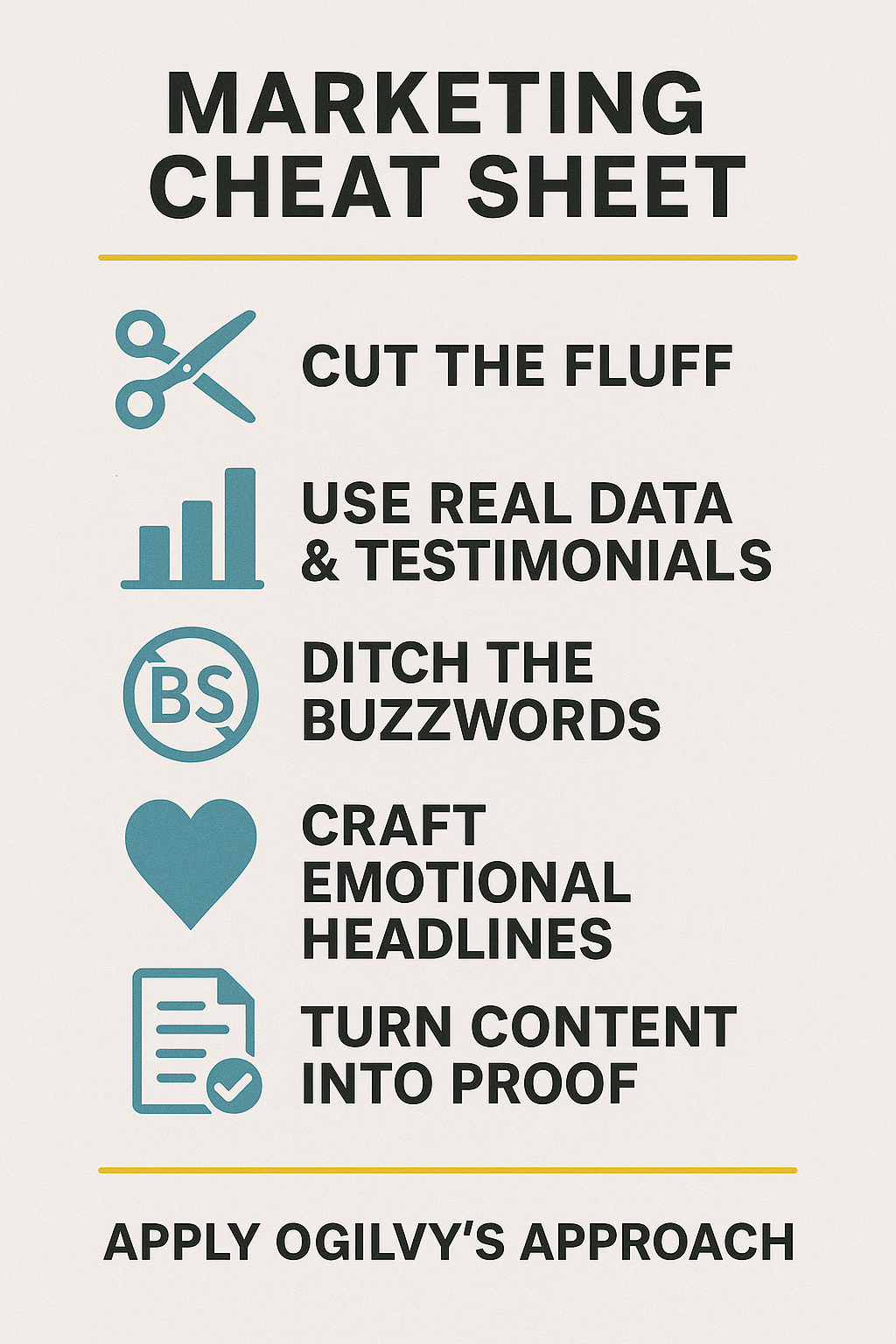
Want to Borrow Ogilvy’s Magic? Here’s Your Cheat Sheet
Enough nostalgia. How do you use this to make your marketing pop?
Always Back Benefits with Proof
- Real testimonials? Don’t just quote feelings—share results. (“After using [Product X], I landed 3 new clients and boosted revenue by 20% in 60 days.”)
- Got data? Flaunt it. Studies, third-party reports, customer satisfaction scores.
- Product specs? Make them exciting. “Our battery lasts 20 hours” beats “long-lasting battery” every time.
Kill the Buzzwords. For Real.
“Synergistic solutions,” “robust frameworks,” “cutting-edge innovation.” Yawn.
Stop sounding like a corporate robot. Speak human.
Instead of “best-in-class performance,” say, “Our new processor loads apps 3x faster than the competition.” Big difference, right?
Craft Headlines That Make People Feel Something
- Use sensory details—what does it look, feel, sound like?
- Tell a tiny story, even in just a few words.
- Be direct. Be juicy. No fluff.
Turn Your Content Into a Data-Driven Proof Machine
Blogs, case studies, videos—they’re not just info; they’re proof.
HubSpot found data-rich content gets 3x higher conversions.
So don’t just tell. Show.
Not Just History: Today’s Brands Killing It With Specificity
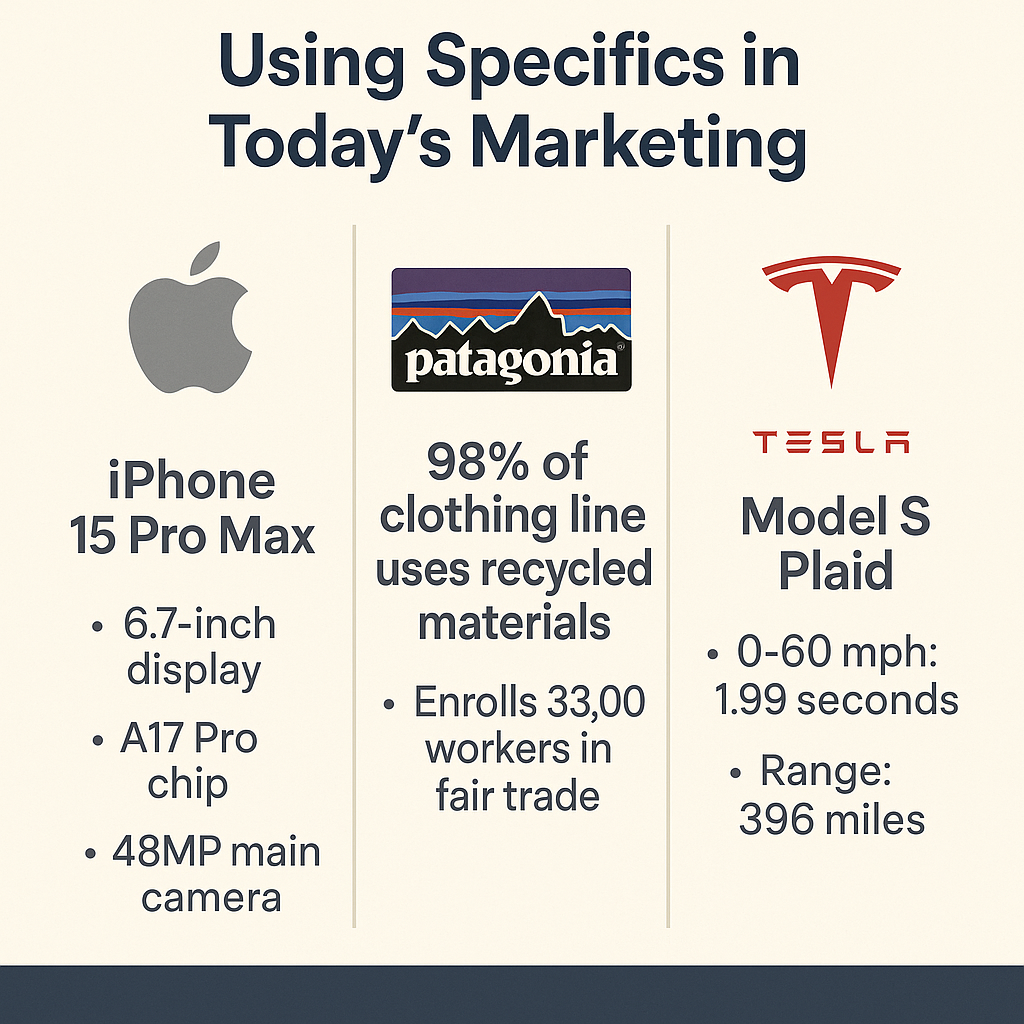
Still think specifics are just for luxury cars? Check out the big leagues:
Apple
They don’t say “good camera.” They say “pro-grade 48MP main camera,” “2x optical zoom,” and “sensor-shift OIS.”
Not just “long battery life,” but “Up to 20 hours of video playback.” Numbers, not empty promises.
Patagonia
Not just “eco-friendly.” They reveal exactly how many plastic bottles went into each fleece, share their supply chain transparently, and even offer free repairs.
They show receipts, turning sustainability into undeniable proof.
Tesla
No flowery talk about “driving joy.” They hit you with “0-60 in 2.5 seconds,” “400-mile range,” and “Full Self-Driving Beta has driven X billion miles.”
Raw, thrilling data.
The Final Word: Be a Rolls-Royce, Not a Lemon
Ogilvy’s Rolls-Royce ad isn’t just a legend. It’s a blueprint for building trust, grabbing attention, and getting wallets open—today.
Here’s the quick strategy:
- Cut the fluff. Get specific. Think “electric clock” level.
- Earn trust with facts and honesty.
- Numbers aren’t boring—they’re vivid stories.
- Ditch buzzwords—talk human.
- Use content as your proof.
Want your marketing to resonate? Stop guessing. Start with details, real proof, and genuine human experiences.
Pro Tip: Looking for data-backed claims?
- Use Google Scholar for solid research.
- Tap customer survey platforms like SurveyMonkey or Typeform for direct feedback.
- Dig into your own analytics tools like Google Analytics or Mixpanel for product insights.
Go be ridiculously specific. Make your audience lean in. Build their trust. And watch those conversions roll in like a Rolls-Royce—smooth, silent, powerful.
Frequently Asked Questions
- Why was David Ogilvy’s Rolls-Royce ad so effective?
- Because it used an oddly specific and believable detail—the electric clock’s noise—to create credibility and trust, cutting through typical marketing fluff.
- How can I apply Ogilvy’s approach to my own marketing?
- Focus on specific, honest details backed by proof. Ditch buzzwords, use emotional storytelling, and turn data or testimonials into relatable proof points.
- Are specific claims more effective than broad statements?
- Yes. Specific, detailed claims stand out, build trust, and are more memorable than vague, generic slogans.
- What brands today use Ogilvy-style marketing successfully?
- Apple, Patagonia, and Tesla all use data-driven specifics to build trust and differentiate themselves.