
OpenAI Frontier: A Game-Changing Enterprise Platform for AI Agent Deployment
Estimated reading time: 7 minutes
Key Takeaways
- Frontier aims to radically simplify AI adoption for businesses by introducing AI coworkers.
- Integration of enterprise systems ensures a unified business context for intelligent agents.
- Robust security and governance framework makes it suitable for highly regulated industries.
- Early adopters report significant revenue growth and process optimizations.
Table of contents
- OpenAI Frontier: A Game-Changing Enterprise Platform for AI Agent Deployment
- Key Takeaways
- A New Era of Enterprise AI Integration
- Core Features That Define Frontier
- Platform Architecture and Integration
- Real-World Applications and Success Stories
- Industry Leaders Embracing Frontier
- Expert Analysis and Future Implications
- Looking Ahead
- Frequently Asked Questions
A New Era of Enterprise AI Integration
In a groundbreaking move that’s set to reshape enterprise AI adoption, OpenAI has unveiled its latest innovation — OpenAI Frontier. Launched on February 5, 2026, this platform marks a significant shift in how businesses build, deploy, and manage AI agents for their operations. Unlike traditional AI implementations, Frontier introduces the concept of “AI coworkers” — sophisticated agents capable of handling complex tasks across various business functions.
This launch comes at a time when businesses struggle to integrate AI into existing workflows. Frontier directly addresses the “capability overhang” — the gap between what AI models can theoretically achieve and what enterprises can practically implement, offering new avenues for accelerating AI adoption.
Core Features That Define Frontier
Business Context Integration
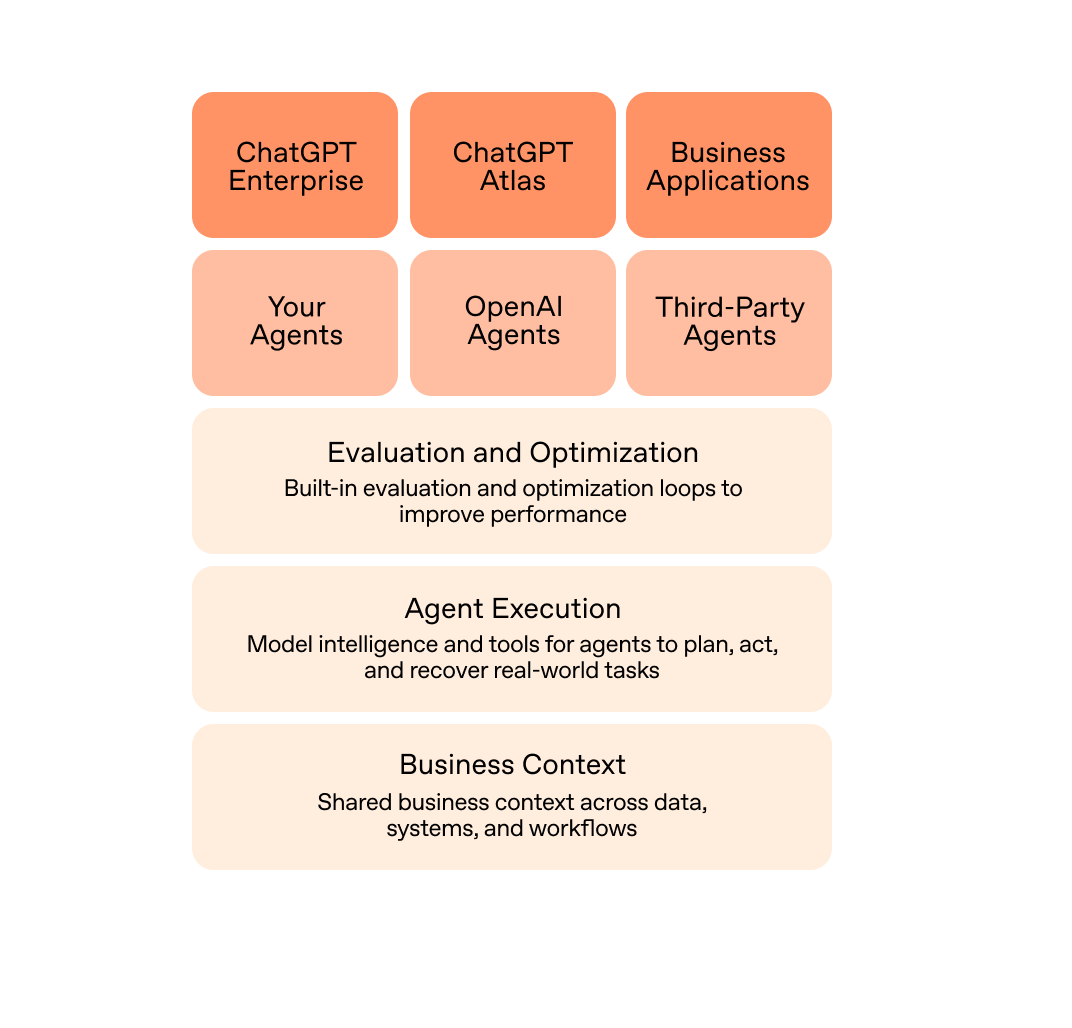
At the core of Frontier lies a unified business context. The platform seamlessly ties together enterprise systems like data warehouses, CRMs, ticketing tools, and internal applications. This creates a semantic layer for AI to truly grasp an organization’s data flow, decisions, and outcomes. Such holistic understanding is vital for real-world AI deployment.
Agent Execution Capabilities
With AI agents acting as reliable digital coworkers, Frontier empowers these agents to manage documents, execute code, analyze data, interact with multiple business tools, build memory, and continuously improve through feedback loops.
Security and Governance Framework
Security remains a focal point in enterprise AI. Frontier addresses this with comprehensive identity management, granular permissions control, clearly defined operational boundaries, and support for open protocols like the Model Context Protocol. The platform can be deployed locally, in enterprise clouds, or hosted by OpenAI, giving businesses flexible ownership models.
Platform Architecture and Integration
Frontier leverages existing OpenAI solutions like ChatGPT Enterprise/Business, the Agents SDK, and AgentKit. The platform isn’t a one-size-fits-all product but a modular framework with stateless model calls, clear role separation, code-based orchestration, and custom integrations of agents, tools, memory, and logic.
Real-World Applications and Success Stories
AI Teammates
Through AI Teammates, Frontier addresses roles in data analysis, financial forecasting, and software engineering collaboration. These agents provide continuous assistance, bridging skill gaps and enhancing decision-making.
Business Process Automation
Business Process Automation gets a boost as Frontier streamlines revenue operations, improves customer support experiences, and optimizes procurement workflows, demonstrating immediate value across diverse industries.
Strategic Initiative Support
Frontier’s capabilities also extend to Strategic Initiative Support such as project coordination across departments, expert-level decision guidance, and resource allocation optimization.
Early Success Stories
Several high-profile enterprises have already reported notable benefits. One energy producer secured $1B in additional revenue, while a manufacturing company saved over $1B by optimizing capital expenditures. Life sciences organizations accelerated regulatory compliance processes, and banking institutions streamlined their back-office operations. Even communications companies report improved call center efficiency.
Industry Leaders Embracing Frontier
Frontier’s potential is highlighted by its roster of eager adopters. First movers include HP, Intuit, Oracle, State Street Farm, Thermo Fisher Scientific, and Uber. Meanwhile, BBVA, Cisco, and T-Mobile are running pilot programs. Greg Pavlik, Executive Vice President at Oracle, praised Frontier’s innovative approach and noted its capacity to spur AI use cases across different sectors.
Expert Analysis and Future Implications
Analysts see Frontier as an important milestone, citing its ability to refine AI models for specialized needs and support custom tool development, improved troubleshooting, advanced context engineering, and strategic cost control. By offering flexible, enterprise-centric AI capabilities, Frontier could propel businesses into a new era of AI maturity.
Looking Ahead
Frontier represents more than merely another AI platform—it’s a blueprint for the future of enterprise AI. From robust security features to its adaptable architecture, Frontier stands poised to bridge the gap between cutting-edge AI and everyday business use. As more corporations implement and refine Frontier-based solutions, the next wave of AI-driven transformation is already taking shape.
Frequently Asked Questions
- What industries benefit the most from OpenAI Frontier?
Frontier’s flexible architecture can adapt to nearly any sector, but early successes have been reported in energy, manufacturing, banking, life sciences, and communications.
- Is Frontier suitable for smaller businesses?
Yes. While initially embraced by enterprise-level organizations, the platform’s modular design also makes it viable for mid-sized businesses seeking tailored AI solutions.
- How does Frontier handle data security?
Frontier includes robust identity management, granular permissions, and flexible deployment options, ensuring that sensitive data remains protected in compliance-heavy environments.
}