
Forget Followers: The Real Growth Hack Brands Are Using to Skyrocket Profits
Estimated reading time: 7 minutes
Key Takeaways
- Retention can jump by 25%. Stop losing customers — keep them close.
- Customer Lifetime Value (CLV) can soar 70%. More value from your existing fans.
- Conversions improve 72%. Trust turns browsers into buyers.
- Focus on connection, not noise. Quality conversations win.
Table of contents
- Introduction
- Why Your “Audience” Might Be All Wrong (And Why Micro-Communities Fix That)
- The Numbers That Will Blow Your Mind (Bring This to Your Boss!)
- Who’s Winning With Micro-Communities? (Steal Their Playbook)
- Ready to Build Your Own Micro-Community? Here’s How
- Why Micro-Communities Are the Real Deal (Not Just a Fad)
- Stop Chasing Ghosts & Start Real Growth Today
- Frequently Asked Questions
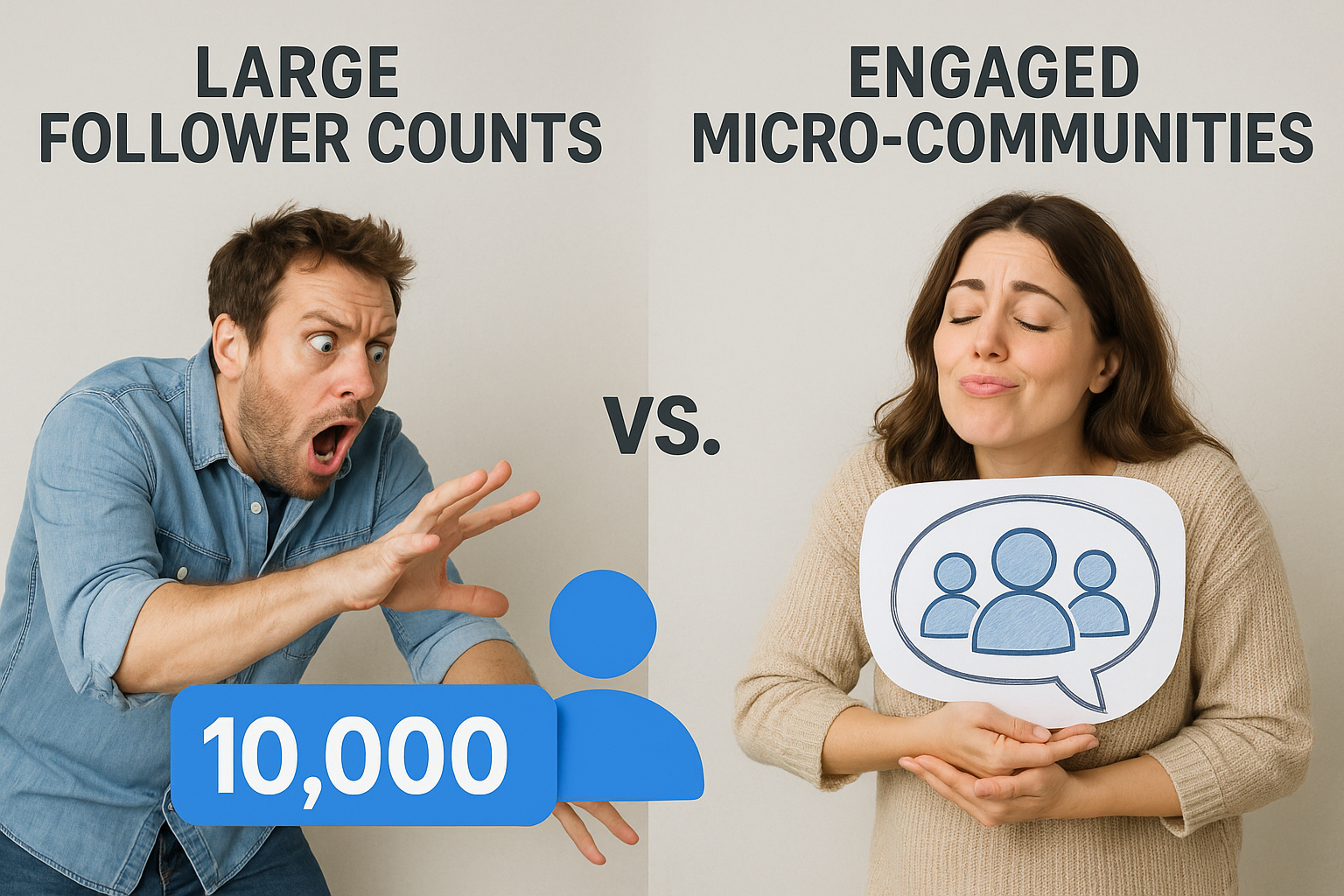
Let’s get real for a second. Chances are your brand is stuck chasing likes, shares, and that ever-glossy follower count. Sound familiar?
Here’s the truth bomb: those shiny numbers? They’re often just digital cotton candy — sweet and tempting but zero nutritional value for your business.
But what if I told you there’s a secret growth hack some brands are quietly using to make obscene money — and it’s not about viral moments or massive follower counts?
I’m talking about micro-communities.
And the stats? They’re downright jaw-dropping.
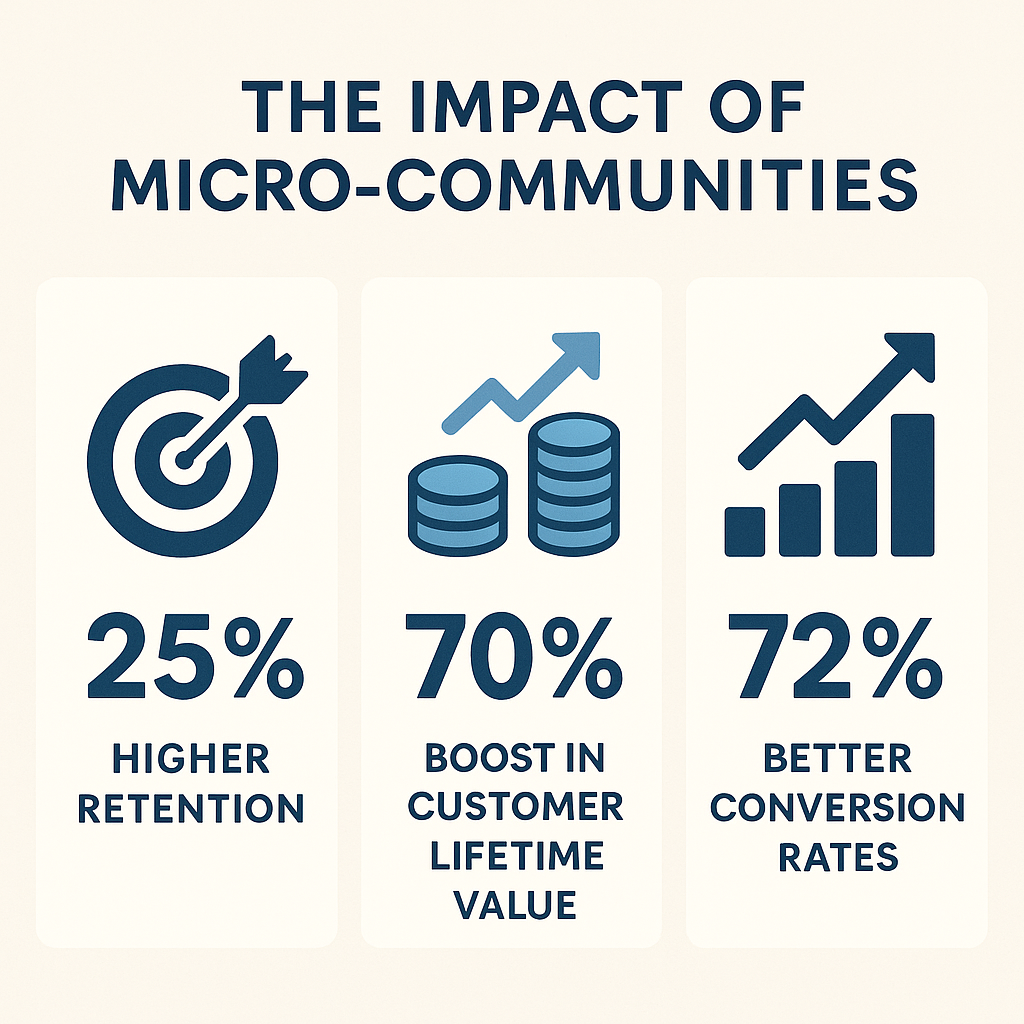
Brands using this retention-first approach enjoy up to 25% higher customer retention rates.
Their Customer Lifetime Value (CLV) shoots up 70%.
And conversion rates? A staggering 72% better.
Yep, read that again.
If your jaw just dropped, good. You’re finally tuning into what serious growth actually looks like.
Why Your “Audience” Might Be All Wrong (And Why Micro-Communities Fix That)
What exactly is a micro-community?
Imagine ditching the noisy stadium filled with strangers and instead, having an intimate chat in a cozy, exclusive club.
Micro-communities are small, tight-knit groups bonded by a shared passion, problem, or value linked directly to your brand.
Unlike sprawling audiences where most people are just half-paying attention (if at all), these folks are all in.
They’re invested.
For too long, brands have believed in “bigger is better”: more followers, louder noise.
That’s like judging a party’s success by how many walked past the door — not by who actually had a blast inside.
Micro-communities flip that narrative with three key priorities:
- Quality over quantity. Would you rather have 1,000 loyal superfans or 100,000 indifferent followers? (Pro tip: superfans buy way more.)
- Two-way conversations, not one-way broadcasts. Think real feedback, passion, and connection — not empty broadcasts.
- Long-term relationships, not one-night stands. This is about building love that lasts, not fleeting sparks.
The Numbers That Will Blow Your Mind (Bring This to Your Boss!)
I get it — “meaningful connection” sounds all warm and fuzzy but what about cold, hard cash?
Here’s the money talk:
- Retention spikes by up to 25%. Customers stick around, turning one-time buyers into loyal repeat customers.
- Customer Lifetime Value jumps 70%. Loyal buyers don’t just come back; they spend more and trust you deeply.
- Conversions improve by 72%. When your community vouches for you, it’s not just marketing, it’s pure gold-grade trust.
These figures aren’t just pulled from thin air. They come from real comparisons between brands focusing on engaged micro-communities versus those still fishing for big follower numbers with little engagement.
The results? Staggering.
Who’s Winning With Micro-Communities? (Steal Their Playbook)
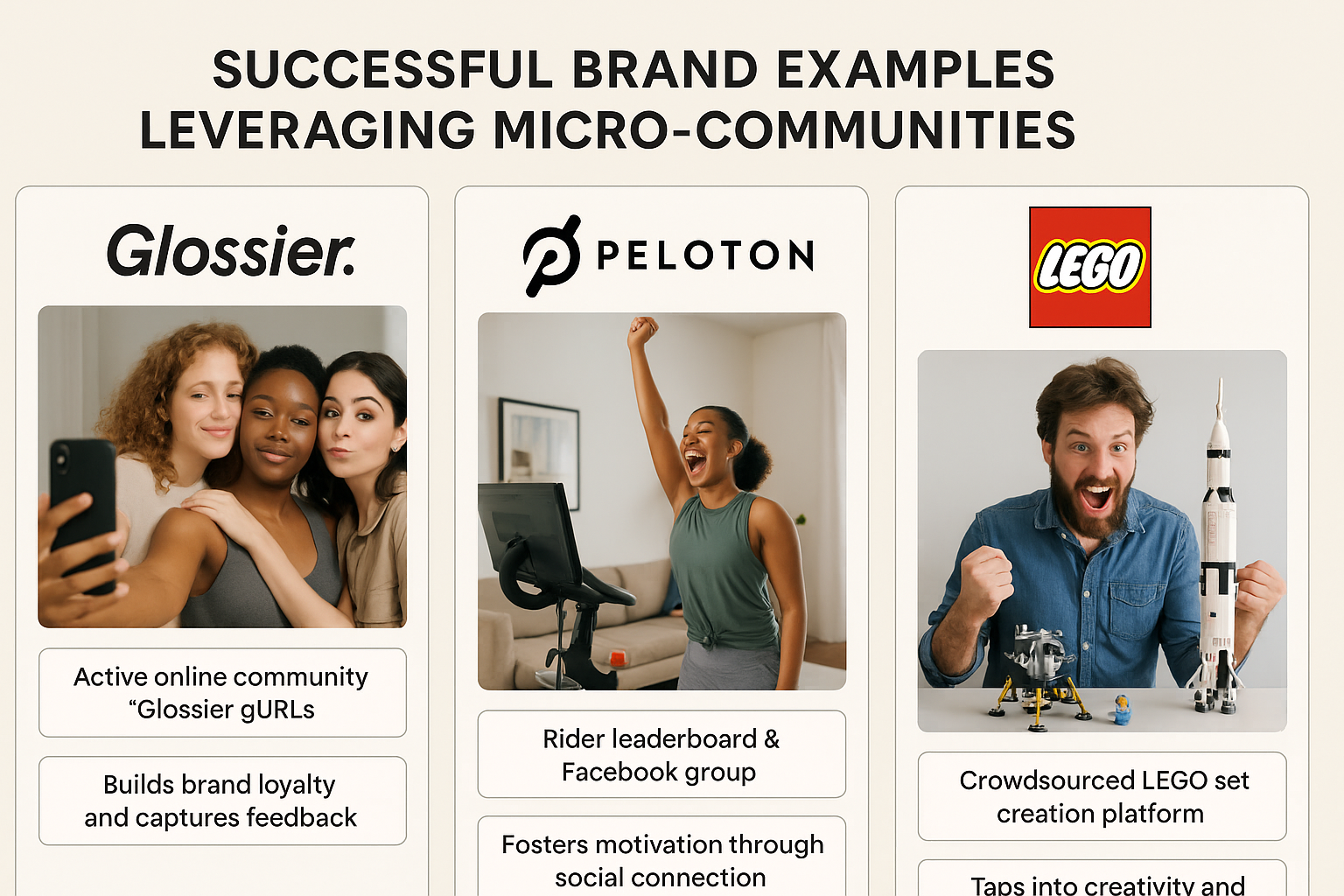
Glossier: More Than Makeup, A Movement
Glossier didn’t just push products; they built exclusive groups where customers swapped tips, gave feedback, and felt part of something bigger.
They turned casual shoppers into passionate brand advocates — basically an unpaid marketing powerhouse.
Peloton: Selling Belonging, Not Bikes
Peloton’s genius isn’t just their exercise gear — it’s the community.
Riders motivate, compete, and celebrate wins together. That sense of belonging keeps subscriptions alive and wallets open.
LEGO Ideas: Fans Driving the Brand
LEGO went beyond sales by creating a platform where fans submit and vote on set ideas, even seeing their designs produced.
This co-creation strategy breeds loyalty that runs deep. Customers aren’t just buyers; they’re brand partners.
Ready to Build Your Own Micro-Community? Here’s How
Stop stressing follower counts and start focusing on loyal fans who buy.
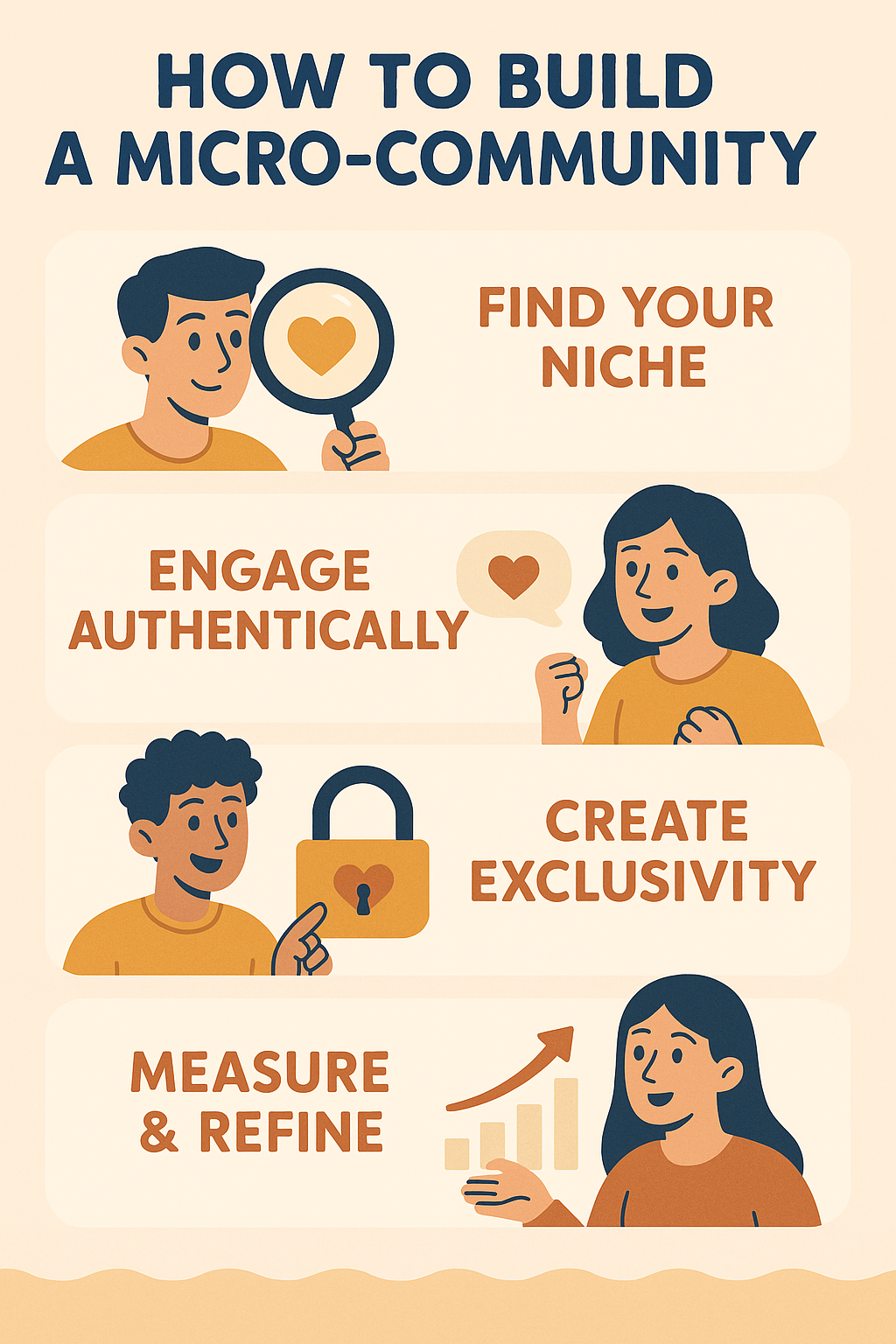
1. Get Specific: Find Your Niche
You can’t build a community for everyone. Zero in on the niche your product or service truly serves.
The smaller the pond, the easier it is to make waves.
2. Go Where They Are
Don’t drag your crowd to your platform. Join them where they hang out naturally:
- Private Facebook Groups for shared interests.
- Discord Servers for gamers and tech tribes.
- Slack Channels for professional or project-based groups.
- Exclusive forums or bespoke apps for a curated vibe.
Pick one and start small.
3. Engage Authentically
This isn’t a megaphone, it’s a conversation.
- Ask meaningful questions that spark real dialogue.
- Run polls, challenges, and live Q&As.
- Highlight member stories and contributions — make them a star.
You’re the host, but the party belongs to them.
4. Create Exclusivity
Why join your club?
- Early access to new products
- Behind-the-scenes content exclusive to members
- Special discounts and perks
- Direct Q&A access to your team
Give them reasons to feel special.
5. Measure & Refine
Track what matters:
- Participation levels
- Conversation quality
- Retention, conversion, and spending compared to average customers
Keep improving — it’s both art and science.
Why Micro-Communities Are the Real Deal (Not Just a Fad)
This isn’t rocket science — it’s human behavior.
People buy from people they trust and relate to.
- Connection matters: Customers who feel they belong identify with your brand — their loyalty runs deep.
- Peer influence beats ads: Recommendations from trusted community members crush cold advertising.
- Consistent engagement reduces churn: Regular touchpoints keep you top-of-mind and your customers coming back.
Big follower counts scatter your audience; micro-communities focus and amplify engagement. That focus pays off — big time.
Stop Chasing Ghosts & Start Real Growth Today
If you’re still hung up on follower counts, it’s time for a reality check.
True, sustainable brand growth isn’t about casting a wider net; it’s about building deeper, meaningful connections.
Micro-communities unlock what really drives people: trust, belonging, and genuine connection.
Quick Takeaways to Remember:
- Retention can jump by 25%. Stop losing customers — keep them close.
- CLV can soar 70%. More value from your existing fans.
- Conversions improve 72%. Trust turns browsers into buyers.
- Focus on connection, not noise. Quality conversations win.
Your Next Steps:
- Be honest — Are you counting followers or building real connections?
- Pick your niche. Who are your people and what do they care about?
- Start small. Create one niche group and blow them away with value.
This isn’t marketing fluff; it’s the blueprint winning brands swear by.
Ready to ditch vanity metrics and build growth that truly matters? Your micro-community awaits — and your customers (and profit margins) will thank you.
Frequently Asked Questions
What exactly is a micro-community?
A micro-community is a small, close-knit group of individuals who share a specific passion, interest, or value related to your brand. Unlike large general audiences, micro-communities foster deeper engagement, trust, and loyalty.
How do micro-communities improve customer retention?
By building meaningful relationships and a sense of belonging among members, micro-communities make customers feel valued and connected, which encourages repeat purchases and long-term loyalty.
Can small brands benefit from micro-communities, or is it just for big companies?
Absolutely! Micro-communities are especially powerful for small to medium brands looking to foster close customer connections. They allow you to focus on quality engagement rather than chasing huge but shallow follower counts.
What platforms work best to build micro-communities?
Depending on your niche, options include Private Facebook Groups, Discord Servers, Slack Channels, exclusive forums, or bespoke apps. The key is to join your audience where they already hang out and feel comfortable.
How do I know if my micro-community is successful?
Track key metrics like participation levels, quality of conversations, retention rates, conversion improvements, and customer spending versus averages. Consistent growth and positive engagement signal success.