
AI Workflow Automation: Architecture & Agent-Oriented Orchestration Explained
Estimated reading time: 8 minutes
Key Takeaways
- AI workflow automation transforms repetitive business tasks into streamlined, intelligent procedures.
- AI agents form the building blocks of modern workflow systems, enabling both sequential and parallel task orchestration.
- Proper orchestration is crucial for handling complex, multi-step processes and real-time decision making.
- Agent-oriented architectures help businesses adapt quickly and scale operations efficiently.
- Industries are already using AI-driven workflows for customer support, compliance, seasonal demand, and much more.
Table of contents
Introduction
AI workflow automation is revolutionizing how businesses handle complex processes by using artificial intelligence to automate and optimize multi-step operations. This technology enables organizations to transform manual, time-consuming tasks into streamlined, intelligent workflows.
With the growing complexity of business operations, there’s an increasing need for orchestrating multi-step AI pipelines that can handle everything from data aggregation to analytics and execution. At the heart of this transformation is AI agent workflow — specialized AI components that manage task handoffs and adapt to changing conditions in real-time. Learn more about multi-agent systems
What is AI Workflow Automation?
AI workflow automation replaces manual processes with intelligent systems that can analyze data, make decisions, and execute tasks in real-time. It’s designed to eliminate repetitive work while boosting efficiency and accuracy.
Key benefits include:
- 30-40% improvement in operational efficiency
- 25-50% reduction in costs
- 40-60% faster decision-making
- Elimination of human errors
- Enhanced scalability
- Improved customer experience through personalization
Common applications include:
- High-volume data entry
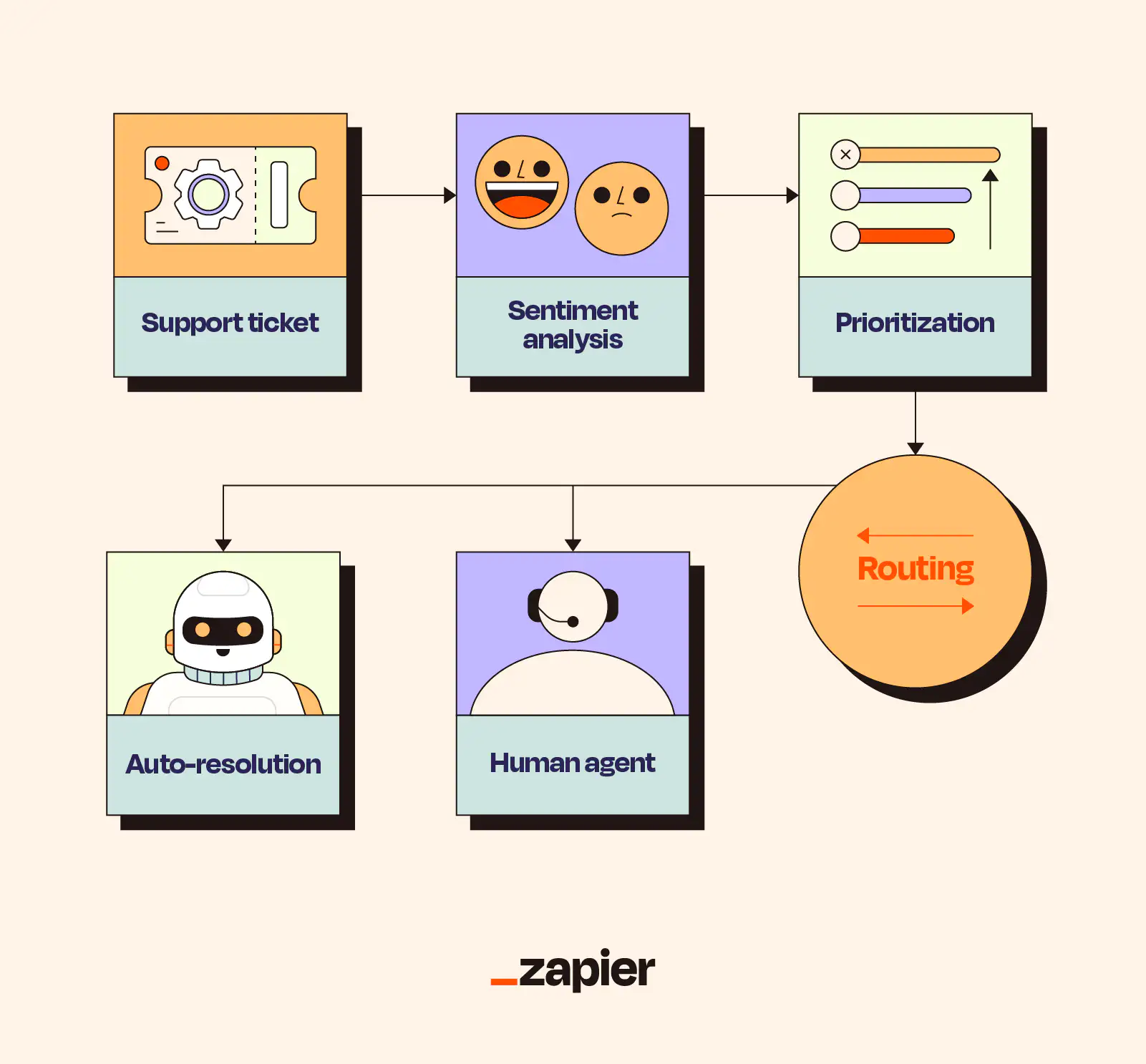
- Customer support triage
- Loan approval processing
- Compliance checks
- Managing seasonal demand spikes
See real-world benefits of AI workflow automation
For a look at tools enabling these workflows, explore AI workflow automation tools
Understanding AI Agent Workflow
AI agent workflow represents the structured sequences where autonomous AI agents work together to process data and make decisions. These agents are the building blocks of modern workflow automation systems (what is an intelligent agent?, in-depth agent guide).
Core functions of AI agents:
- Pattern recognition and decision-making
- Task categorization and routing
- Predictive analysis
- Data processing and transformation
Agents can work:
- Sequentially – passing outputs from one agent to the next
- In parallel – multiple agents working at once
Further reading: AI workflow automation in practice
For real-world AI workflow examples, see these use cases
Core Architecture of AI Workflow Automation
The foundation of AI workflow automation consists of three main components:
- Orchestrator
- Acts as the central controller
- Sequences automation steps
- Manages agent handoffs
- AI Agents
- Execute specific workflow tasks
- Handle analysis and decision-making
- Process and transform data
- Data Flow Mechanisms
- Enable seamless information transfer
- Maintain data consistency
- Support real-time updates
For more, check IBM: AI workflow explained or dive into agent architectures in depth
FAQ
-
What industries benefit most from AI workflow automation?
AI workflows are used in finance, healthcare, logistics, retail, customer support, and any field where reducing manual, repetitive work adds value.
-
How do AI agents differ from traditional automation bots?
Unlike traditional bots that follow fixed rules, AI agents can make context-aware decisions, adapt to new data, learn over time, and coordinate with other agents for complex tasks.
-
Can AI agent workflows scale as my business grows?
Yes — agent-oriented architectures are designed for scalability, allowing you to add more agents or tasks and adapt orchestrations as complexity increases.
-
Where can I see real AI workflow examples in action?
For real-world scenarios and best practices, visit this collection of AI workflow examples.